

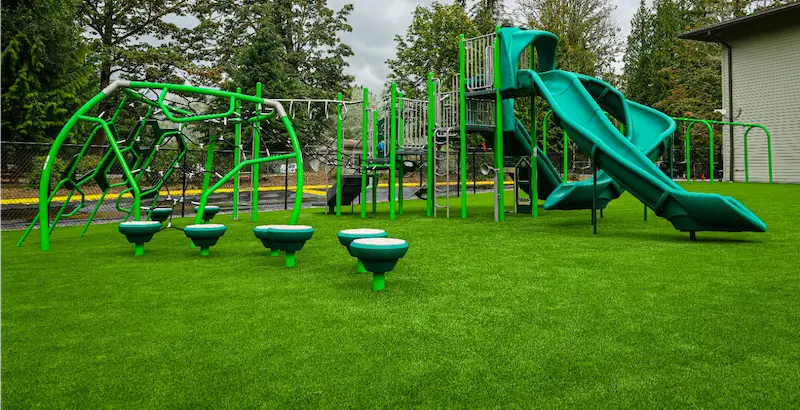
Using synthetic turf as a playground surface provides a multitude of advantages, the most important of which is safety. Turf playground surfaces ensure a safer environment for children in a variety of ways.
- Impact Absorption: certified padding beneath the turf system improves fall safety
- Low Abrasion: synthetic turf decreases the risk of abrasions
- Cleanliness: polypropylene blades are antimicrobial and easy to clean
Synthetic Turf Playgrounds: Impact Absorption
Consistent Impact Protection for Playground Safety
Typical loose playground footing, such as mulch or sand, are easily displaced. These materials become scattered around the play area during regular use, especially with running, jumping, and other heavy use in high-traffic areas.
The disbursement of these fillers can result in an uneven play surface. More importantly, the sparse areas of the playground can offer less impact absorption than intended. These materials must be raked back into position in order to provide consistent safety levels.
Synthetic turf is installed on top of shock-absorbing padding. A child-safe playground turf system depends on more than the grass blades, including foam safety panels or shock pads. High-quality systems use thick foam padding sized for critical fall height ratings to help reduce injury from falls. Because the padding is located under the turf material, it cannot be displaced. It provides consistent shock-absorbing protection and surface durability built to withstand heavy traffic.
Measured Impact Absorption
The type of padding installed in playground turf is specific to the height of the play equipment and its intended use.
In fact, the American Society for Testing and Materials (ASTM) standard F1292 provides playground designers with detailed safety guidelines. IPEMA certification also helps verify that playground turf systems meet or exceed recognized industry safety standards for children.
Synthetic Turf Northwest uses this standard to design residential and commercial playgrounds with impact-absorbing properties that are optimized for each particular installation.
Reduced Tripping Hazards
When properly installed, artificial turf provides an even, stable footing across the entire play area. It reduces the inconsistent and uneven surfaces that are common with other playground materials, like wood chips, that are displaced by use.
Of course, high-traffic areas can wear out a little more quickly. In this event, specific worn areas can be replaced as needed to maintain a consistent surface, though artificial playground grass typically lasts about 10–15 years.
Non-Abrasive
Synthetic turf is a plush solution that makes for a soft landing. Its polypropylene blades are smooth, non-abrasive, and gentle on hands and elbows. Polyethylene is the industry standard for children’s play areas because it feels realistic, stays soft, and offers UV stabilization. Many options also use realistic, multi-colored fibers to create a more attractive look while eliminating grass stains for kids.
Synthetic Turf Playgrounds Are Clean
Turf can be rinsed with water. Designed to mimic the lush texture and vibrant color of natural grass, it stays cleaner and keeps its vibrant hues without fertilizers, harmful pesticides, or other lawn chemicals. It is 100% non-absorbent, so rinse water—or spilled drinks—drain right through the turf system, and premium playground turf with porous polyurethane backing supports rapid drainage and a quicker return to play after heavy rain.
It is also chemically inert – it won’t react, whether exposed to spilled snacks, sunscreen, road salt, etc. A turf playground can be spot cleaned with mild detergents as needed. It can get hotter than natural grass in sunlight, but cooling technology can help manage surface temperature.
Antimicrobial & Pest-Free
Artificial grass from Synthetic Turf Northwest is antimicrobial. It helps reduce bacteria growth compared with other organic alternatives. Quality playground grass can also include perforated, antimicrobial backings for better drainage that help prevent mold growth.
Synthetic turf is less likely to harbor pests. Playgrounds constructed with synthetic turf are less likely to have fleas, ants, ticks, wasps, or any other insect common with organic footing alternatives.
Hypoallergenic
Children with allergies benefit from playground turf made with artificial grass. Pollen rinses away easily and with no grass clippings, playgrounds made with artificial turf are also hypoallergenic.
The turf and infill materials are non-toxic and non-flammable, and infill helps keep the turf blades upright; rounded silica sand or antimicrobial acrylic-coated infill are good non-toxic options. Products can also be certified to EN 71-3 and be free from harmful chemicals such as lead.
Environmental Advantages of Playground Turf
Artificial turf playgrounds can be maintained with very little or no chemicals that can be potentially harmful to children. They also require no fertilizers and eliminate routine tasks like mowing, reducing maintenance, and saving money over time compared with natural surfaces.
It does not need to be watered, so turf playgrounds greatly reduce water consumption. Routine care still includes cleaning and refilling infill to maintain appearance and extend service life.
What’s more, the plastics used in our synthetic turf products are highly recyclable.
If you have questions about artificial grass for playgrounds, please contact us.